

11 Aug Floor Protection During Renovation: Choosing the Right Shoe Covers
Floor protection during renovation is the combination of surface coverings and controlled foot traffic that keeps finished floors free of scratches, moisture stains, and residue while a renovation project is underway. For most homeowners and contractors, that means boards, film, or red rosin paper laid across the work area, but that’s only half the plan. The other half is what happens the moment someone steps off the covered floor and onto the finished one next to it.
What Renovation Traffic Does to Finished Floors
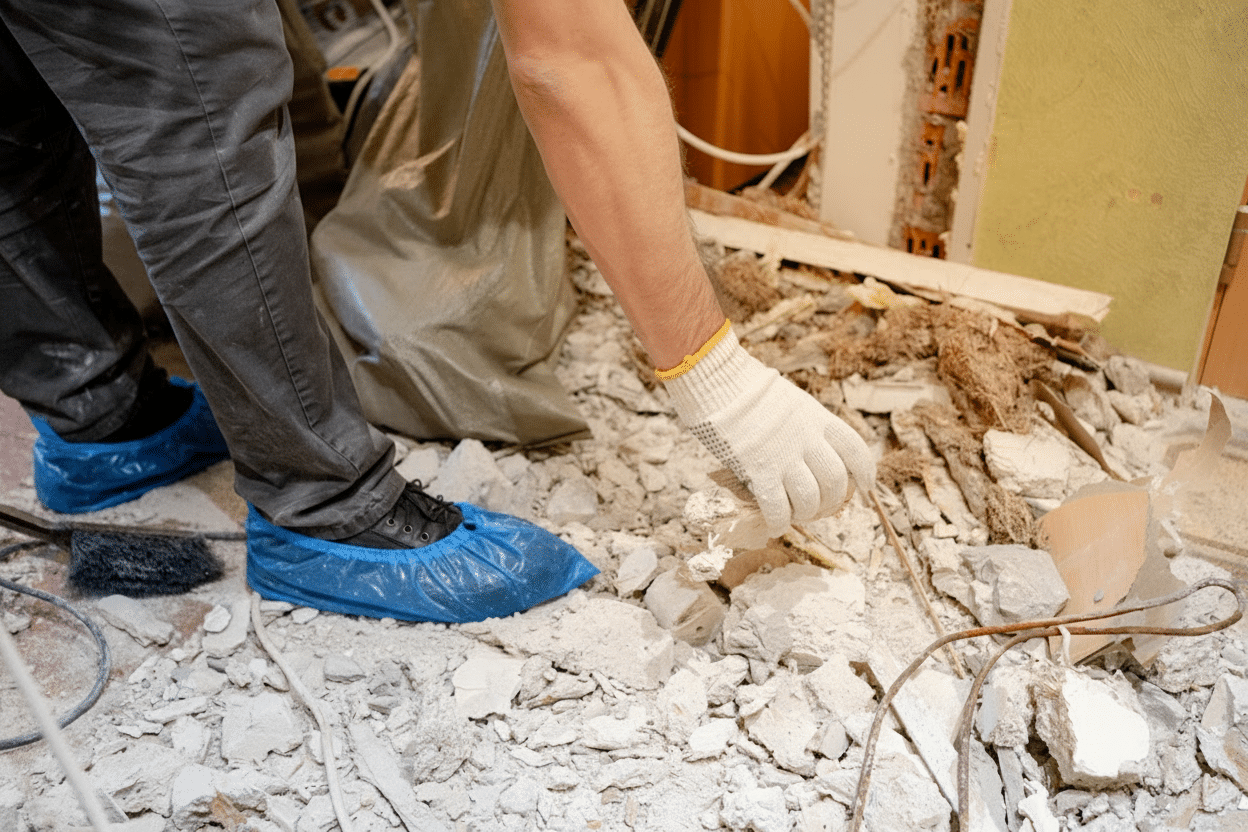
A renovation project rarely stays contained to the room under construction. Crews move in and out constantly, hauling materials, carrying debris, checking on other parts of the job site, and every trip carries something onto the floors outside the work zone. Grit is the most persistent problem. Fine particles of sand, drywall dust, and construction debris get pressed into boot soles and ground into finished wood floors with each step, acting on the surface much like sandpaper and leaving fine scratches across the paths crews use the most.
Moisture adds a second risk. Wet or muddy boots track water onto hardwood, where it can sit in the seams long enough to cause cupping, staining, or warping. Paint spills, joint compound, and adhesive residue transfer easily from a work surface onto an adjacent carpet or tile floor before anyone notices.
The cost of skipping floor protection shows up later once the job is complete. A hardwood floor with renovation-related scratches or water staining typically requires $1,100 to $2,700 in refinishing, and the total climbs when boards need to be replaced rather than resurfaced. A few dollars spent now to protect floors is a lot less than the costly repairs from rework later.
Where Floor Protection Falls Short
Surface protection products like boards, film, and red rosin paper are good at covering open floor space where the work is happening. Heavy-duty temporary floor boards can be layered for extra durability under staged equipment and material carts, and they hold up well against dropped tools and rolling loads. What none of them do, however, is follow the crew. Coverage stops at the doorway, and heavy foot traffic crosses that doorway dozens of times a shift, into hallways, up and down stairs, and through finished rooms that were never part of the renovation plan to begin with.
That’s the actual gap in most renovation floor protection plans. The floor under the drop cloth is covered, but the floor everywhere else is one boot print away from a scratch, a stain, or more damage than a five-minute cleanup can fix. Shoe covers close that gap by moving with the crew rather than staying behind at the door, which is exactly why choosing the right pair matters.
What to Look For in a Shoe Cover for Renovation Work
Not every shoe cover is built for a construction project. Three factors decide whether one actually does the job:
Traction. A newly refinished floor is more slippery immediately after coating than it will be once fully cured, and full cure can take one to two weeks even though the surface feels dry within a day. A cover with no grip on the sole adds risk on exactly the surface it’s meant to protect.
Durability. Job sites are abrasive by nature. A cover has to hold up against tracked-in grit, dropped tools, and repeated on-and-off cycles without tearing through before lunch. Thin, single-layer covers wear out fast on concrete and unfinished plywood long before crews ever reach the finished space.
Fit. Renovation crews work in boots, not sneakers. A cover cut for a standard shoe won’t stretch over a work boot without splitting at the seam, and a loose cover that bunches is more likely to slip off mid-step than protect anything. Cover material and construction make the difference here.
At Shoe Cover Magic, we have a full range of shoe covers, offering options built to handle boots and job-site conditions for a clean finished result every time.
Protecting Different Flooring Types
Hardwood. Grit and moisture are the two biggest threats to a hardwood floor, and both cause damage quietly; a few passes a day, every day, until the finish looks worn. Prevention costs far less than the refinishing bill that follows.
Tile. Grout lines trap dust, dirt, and adhesive residue that’s tough to clean out once it sets, and a dropped tool or piece of equipment can crack or chip glazed tile in a single hit.
Stone. Natural stone is porous, which makes it prone to staining and etching from paint, joint compound, and other renovation byproducts if spills sit before they’re cleaned up.
Carpet. Paint, dust, and mud become permanent stains fast if they aren’t caught immediately, and repeated heavy foot traffic across the same path crushes and mats the fibers over the course of a project.
Taking Shoe Covers On and Off Without Slowing the Job
Crews move in and out of a covered work zone dozens of times a shift, for materials, tools, or a break. If putting on a shoe cover takes two hands and thirty seconds, it gets skipped after the first few trips. A hands-free dispenser removes that friction by allowing users to simply step in and out, keeping both hands free for whatever they’re carrying. On projects with more than one entry point or a crew of more than a couple of people, placing a shoe cover dispenser at each covered threshold helps maintain compliance without slowing anyone down.
A hands-free shoe cover remover keeps things moving on the way out, too. Crews can step out of their covers without bending down or using their hands, which keeps foot traffic moving and reduces the trip hazard posed by covers left lying around underfoot. It also keeps used covers corralled at the exit instead of scattered across the job site, so the next person in can grab a clean pair without breaking stride.
Protect the Entire Path During Renovation with Shoe Cover Magic
Boards, film, and rosin paper protect the square footage under the drop cloth, but the rest of the house needs protection from the foot traffic, too. With shoe covers, dispensers, and removers from Shoe Cover Magic, your floor protection plan becomes even more complete, and ensures clients are satisfied with the cleanliness left behind once you leave.
For more information about shoe covers for construction workers, or to request a quote for your company, contact Shoe Cover Magic today.

Sorry, the comment form is closed at this time.